Cannabidiol, better known as CBD, has become a familiar ingredient in a wide variety of hemp-derived products. But CBD itself is not new. Its history stretches back decades and is closely connected to scientific research into the cannabis plant, changes in U.S. hemp law, and growing consumer interest in hemp-derived products.
Here’s a look at how CBD went from a relatively little-known plant compound to an ingredient found in products sold throughout the United States.
What Is CBD?
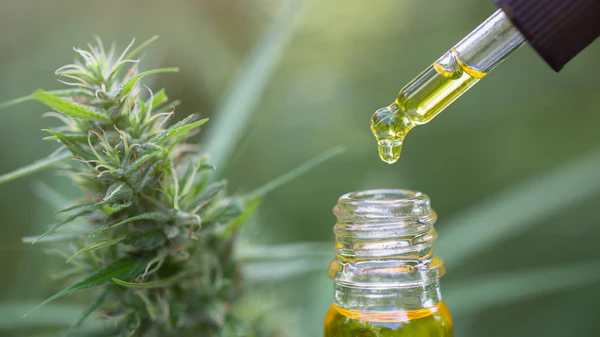
CBD, or cannabidiol, is one of the naturally occurring cannabinoids found in the cannabis plant.
Cannabis plants contain numerous naturally occurring compounds, including cannabinoids, terpenes, and flavonoids. Two of the best-known cannabinoids are CBD and THC (tetrahydrocannabinol).
CBD and THC are different compounds. THC is associated with the intoxicating effects of marijuana, while CBD does not produce the same intoxicating effect.
Today, CBD used in many consumer products is derived from hemp.
The Early History of Cannabis
Cannabis has been cultivated by humans for thousands of years.
Historically, different varieties of the cannabis plant were grown for a number of purposes. Hemp varieties were particularly valued as an agricultural crop because their fibers could be used to make products such as rope, fabric, paper, and other materials.
The plant also became the subject of scientific interest as researchers began identifying and studying its individual chemical compounds.
That research eventually led to the identification of CBD.
The Discovery of CBD
CBD was first isolated in 1940 by researchers working with American chemist Dr. Roger Adams at the University of Illinois.
At the time, scientists were beginning to separate and identify individual compounds found in cannabis. Although CBD had been isolated, researchers did not yet fully understand its chemical structure.
Additional research followed during the decades that came afterward.
By the 1960s, scientists had made significant advances in understanding the structures of CBD, THC, and other cannabinoids found in the cannabis plant.
These discoveries helped establish the foundation for continued scientific research into cannabinoids.
Growing Scientific Interest in Cannabinoids
As researchers learned more about cannabis, interest expanded beyond the plant itself to its individual components.
Scientists identified numerous cannabinoids and began investigating how these compounds interact with biological systems.
Research into cannabinoids also contributed to the eventual identification of what became known as the endocannabinoid system, a naturally occurring signaling system in the body.
The discovery of this system created additional scientific interest in cannabinoids and their interactions with the body.
Research in this field continues today, and there is still much that scientists are working to understand about CBD and other cannabinoids.
Hemp and Marijuana: What’s the Difference?
The words cannabis, hemp, and marijuana are sometimes used interchangeably, but they do not mean exactly the same thing.
Cannabis refers broadly to plants within the cannabis family.
Under U.S. federal law, hemp is generally defined based on its concentration of delta-9 THC. The 2018 Farm Bill removed hemp meeting the federal definition from the Controlled Substances Act’s definition of marijuana.
That change helped create the modern U.S. hemp industry.
It is important to understand, however, that the Farm Bill did not eliminate federal regulation of products made from hemp. Products containing CBD remain subject to applicable federal and state laws and regulations.
The 2018 Farm Bill and the Growth of Hemp
The Agriculture Improvement Act of 2018, commonly known as the 2018 Farm Bill, was an important milestone for the U.S. hemp industry.
The law removed hemp and certain hemp derivatives meeting the federal definition of hemp from the Controlled Substances Act.
This opened new opportunities for hemp cultivation, processing, manufacturing, and research in the United States.
It also contributed to a dramatic increase in consumer awareness of CBD.
However, the legal status of hemp cultivation should not be confused with blanket approval of every type of CBD product or every claim made about CBD.
Federal and state rules governing hemp-derived products continue to evolve.
The Rise of Consumer CBD Products
As interest in hemp expanded, CBD began appearing in an increasingly diverse range of consumer products.
Depending on applicable laws and regulations, consumers may encounter CBD in formats such as:
- Oils and tinctures
- Topical creams and balms
- Ointments
- Roll-ons
- Sticks
- Gummies and other ingestible formats
- Pet products
Products can also differ considerably in their formulations and CBD concentrations.
That’s why it is important to read the individual product label rather than assuming that all CBD products are alike.
Full-Spectrum, Broad-Spectrum, and CBD Isolate
As the CBD market developed, several different types of hemp extracts became common.
Full-spectrum hemp extract contains CBD along with other naturally occurring compounds from the hemp plant, which may include additional cannabinoids, terpenes, and flavonoids.
Broad-spectrum products generally contain multiple naturally occurring hemp compounds while being processed differently with respect to THC content.
Because formulations vary, consumers should always refer to the specific manufacturer’s product information and laboratory documentation.
CBD Isolate
CBD isolate is a highly refined form of cannabidiol intended to isolate CBD from other components of the hemp extract.
Some products use CBD isolate while others use broader hemp extracts.
The type and amount of CBD should be identified on the individual product’s current packaging.
CBD Research Continues
Scientific research into CBD and other cannabinoids continues.
It is important, however, to distinguish scientific research from claims made about consumer CBD products.
Research into a substance does not mean that every retail product containing that substance has been demonstrated to diagnose, treat, cure, mitigate, or prevent a disease or medical condition.
The U.S. Food and Drug Administration has approved a specific prescription drug containing purified CBD for certain seizure disorders. That prescription drug went through the FDA drug-approval process and should not be confused with over-the-counter hemp-derived CBD products sold to consumers.
Consumers should be cautious about claims that ordinary retail CBD products have been proven to treat diseases or medical conditions.
Choosing CBD Products
As the CBD marketplace has grown, product quality and labeling have become increasingly important considerations.
When comparing products, consider information such as:
- Amount of CBD per serving or application
- Type of hemp extract
- Complete ingredient list
- Suggested use
- Product warnings
- Manufacturer information
- Testing information when available
- Expiration or best-by date
- Current product packaging
Consumers should also purchase products from sources that provide clear product information and are willing to answer questions about the products they sell.
The Continuing Story of CBD
CBD has traveled an interesting path—from its isolation by researchers in 1940 to becoming one of the best-known compounds associated with hemp.
Scientific understanding of cannabinoids has continued to develop, while changes in hemp law have contributed to the growth of a large consumer marketplace.
At the same time, CBD remains an evolving area of scientific research and regulation.
For consumers, the most useful approach is to rely on accurate product information, read labels carefully, understand what a particular product contains, and avoid assuming that general information about CBD applies equally to every CBD product.
This article is provided for general educational and historical information about CBD, hemp, and the development of the CBD marketplace.
Nothing in this article is intended to provide medical advice or to represent CBD or any HECANDI product as diagnosing, treating, curing, mitigating, or preventing any disease or medical condition.
If you have questions about whether a CBD product is appropriate for you, particularly if you take medications, are pregnant or nursing, or have a medical condition, consult a qualified healthcare professional.