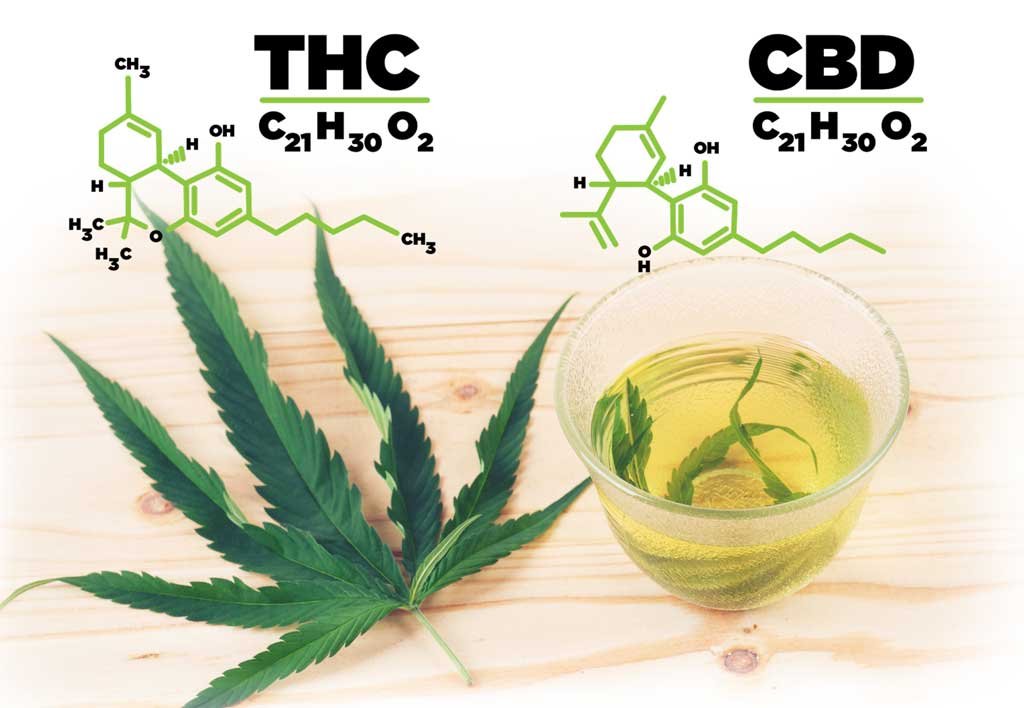
CBD and THC are two of the best-known cannabinoids found in cannabis plants. Although they come from the same plant family, they are not the same thing.
They differ in several important ways, including their intoxicating effects, their presence in hemp-derived products, and how products containing them are regulated.
Understanding these basic differences can help you read product labels and better understand what you’re purchasing.
What Is CBD?
CBD stands for cannabidiol.
CBD is one of many naturally occurring cannabinoids found in cannabis plants and can be derived from hemp.
Unlike delta-9 THC, CBD does not produce the characteristic intoxicating “high” associated with marijuana.
CBD is used as an ingredient in a variety of hemp-derived consumer products. Depending on the product, these may include:
- Gummies
- Topical creams and balms
- Ointments
- Sticks and roll-ons
- Other hemp-derived products
CBD products can vary considerably in their formulation, CBD concentration, additional ingredients, and type of hemp extract.
Always read the individual product label to understand exactly what a particular product contains.
What Is THC?
THC stands for tetrahydrocannabinol.
There are different forms of THC, but delta-9 THC is the cannabinoid most commonly associated with the intoxicating effects of marijuana.
CBD and THC can both occur naturally in cannabis plants, but they have different characteristics.
The amount of delta-9 THC present in the plant is also important to the federal legal definition of hemp.
Does CBD Get You High?
CBD itself does not produce the characteristic intoxicating “high” associated with delta-9 THC.
That is one of the most important differences between CBD and THC.
However, this doesn’t necessarily mean that every product containing CBD is THC-free. Certain hemp-derived products, particularly full-spectrum products, may contain THC.
If avoiding THC is important to you, carefully review the individual product label and available manufacturer testing information.
Hemp, CBD and THC
The terms hemp, CBD, THC, and marijuana are sometimes used interchangeably, but they don’t mean the same thing.
Hemp is cannabis that meets the applicable legal definition based in part on its delta-9 THC concentration.
CBD and THC are cannabinoids—naturally occurring compounds that can be found in cannabis plants.
The 2018 Farm Bill changed the federal treatment of hemp by removing hemp meeting the statutory definition from the Controlled Substances Act’s definition of marijuana.
However, that did not mean that every product made from hemp or containing CBD automatically became legal for every use or in every state.
Federal and state requirements governing hemp-derived products can vary and continue to change.
CBD vs. THC: The Basic Differences
CBD
- Stands for cannabidiol
- Is a naturally occurring cannabinoid
- Can be derived from hemp
- Does not produce the characteristic intoxicating “high” associated with delta-9 THC
- Is available in different types of hemp extracts
- Can be found in a variety of consumer product formats
THC
- Stands for tetrahydrocannabinol
- Is a naturally occurring cannabinoid
- Exists in several forms
- Delta-9 THC is associated with the intoxicating effects of marijuana
- May also be present in certain hemp-derived products
- Is subject to federal and state requirements that vary according to the product and circumstances
What Is Full-Spectrum CBD?
Full-spectrum hemp extract contains CBD along with other naturally occurring components of the hemp plant.
Depending on the product, these may include:
- Other cannabinoids
- Terpenes
- Flavonoids
- THC
The exact cannabinoid profile and amount of each component can vary by product.
If THC content is important to you, check the current product label and available laboratory or manufacturer information rather than assuming that all CBD products are the same.
What Is Broad-Spectrum CBD?
Broad-spectrum hemp products generally contain CBD along with other components of hemp but are processed differently with respect to THC.
Manufacturing methods and product specifications can vary.
For that reason, consumers should review the individual product information rather than assuming that every product labeled “broad spectrum” has an identical cannabinoid profile.
What Is CBD Isolate?
CBD isolate is a highly refined form of cannabidiol designed to separate CBD from other components of hemp extract.
A product formulated with CBD isolate is therefore different from one formulated with full-spectrum or broad-spectrum hemp extract.
The product label should identify the type of CBD or hemp extract used in the formulation.
Can CBD Products Contain THC?
Yes. Some hemp-derived CBD products can contain THC.
Full-spectrum products, in particular, may contain THC along with CBD and other naturally occurring hemp compounds.
If you want to avoid THC for employment, drug testing, personal preference, or another reason, carefully review the manufacturer’s product information before purchasing or using a product.
Can CBD Affect a Drug Test?
Consumers should not assume that using a CBD product guarantees a negative drug-test result.
Some hemp-derived products can contain THC, and cannabinoid concentrations vary among products.
Testing methods and thresholds can also vary.
HECANDI cannot guarantee the outcome of a drug test following the use of any hemp-derived product.
How Are CBD Products Different From One Another?
Two products labeled “CBD” may have very different formulations.
When comparing products, consider:
- CBD content
- Type of hemp extract
- THC content
- Complete ingredient list
- Product format
- Manufacturer’s directions
- Warnings
- Testing information
- Expiration or best-by date
The complete product information is much more useful than simply looking for the letters “CBD” on the package.
What About FDA Approval?
It is important to distinguish retail CBD products from FDA-approved prescription medications.
The FDA has approved a prescription drug containing purified CBD for specific medical uses. That prescription medication went through the FDA drug-approval process.
That does not mean that ordinary retail CBD products have been approved by the FDA to diagnose, treat, cure, mitigate, or prevent diseases or medical conditions.
HECANDI does not represent its retail CBD products as substitutes for FDA-approved medications or medical treatment.
What Should You Look for When Choosing a CBD Product?
Look for clear product information that helps you understand exactly what you’re purchasing.
Useful information can include:
- Amount of CBD
- Type of hemp extract
- THC information
- Complete ingredients
- Suggested use
- Manufacturer’s directions
- Warnings
- Testing information
- Expiration or best-by date
Be cautious about CBD products promoted with promises to cure or treat diseases or medical conditions.
CBD vs. THC: The Bottom Line
CBD and THC are both naturally occurring cannabinoids, but there are important differences between them.
CBD does not produce the characteristic intoxicating “high” associated with delta-9 THC. CBD products can nevertheless differ considerably in their cannabinoid profiles, and some hemp-derived products may contain THC.
The simplest approach is to read product labels carefully and choose products based on their ingredients, cannabinoid content, formulation, manufacturer information, and testing—not promises about medical results.
At HECANDI, our goal is to provide straightforward product information so you can understand what you’re purchasing and select the product format that best fits your preferences.
This article is provided for general educational information about CBD, THC, hemp, and cannabis-derived products.
Nothing in this article is intended as medical advice or to represent CBD, THC, hemp extract, or any HECANDI product as diagnosing, treating, curing, mitigating, or preventing any disease or medical condition.
Always read and follow the current product label, including its ingredients, directions and warnings.